


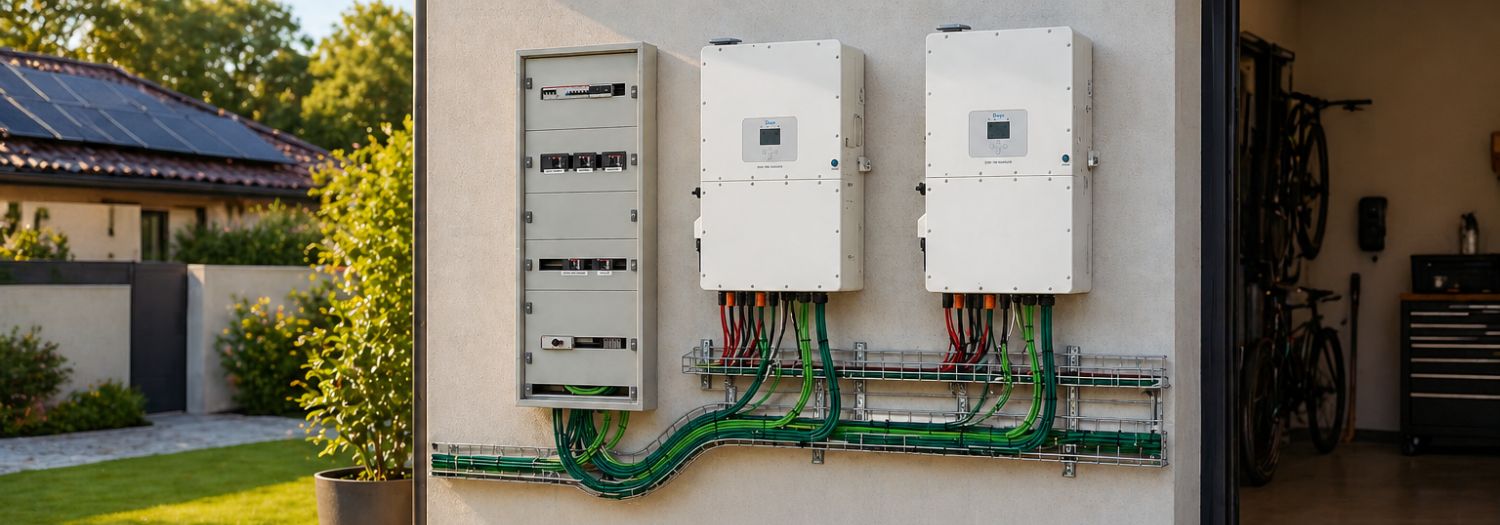
When we think of a photovoltaic system, the first thing that usually comes to mind are the solar panels. This is normal: they are the most visible part of the system and are responsible for capturing solar radiation. However, there is another component that is just as important, and often much less known: the solar inverter.
The inverter is a key element in any solar self-consumption installation, whether in a house, a company, an industrial building or an energy community. Its main function is to transform the electricity produced by the solar panels into energy that can actually be used on a daily basis. That is why choosing the right photovoltaic inverter is not a minor detail: it can make the difference between an efficient, profitable and future-proof installation, or a system that does not take advantage of its full potential.
What is a solar inverter?
A solar inverter is the equipment responsible for converting the direct current generated by the solar panels into alternating current, which is the type of electricity used by most homes, businesses and electrical equipment.
Photovoltaic panels produce DC power. This energy alone cannot directly power appliances, lighting, machinery or normal electrical systems. In order for that electricity to be used within the facility, it must first pass through the inverter.
Simply put: the panels produce the energy, but the inverter makes it useful.
In addition to transforming current, the inverter also performs other very important functions. It controls the performance of the installation, monitors production, helps to detect possible faults and, in many cases, manages the relationship between the panels, the electrical grid and the solar batteries.
That is why it is often said that the inverter is the heart or the brain of a photovoltaic system.
How does a solar inverter work?
The operation of a solar inverter starts with a simple, but technically very important process. When solar panels receive light, they generate electricity in direct current. This energy travels from the photovoltaic modules to the inverter, usually grouped in strings in the case of central inverters.
Once the energy reaches the inverter, it is transformed into alternating current. From that moment on, the electricity can be used by the home or business, stored in batteries if the system allows it, or fed into the grid if there is a surplus.
The performance of this transformation is key. If the inverter does not work efficiently, part of the energy generated by the panels is lost in the process. That is why it is not enough to choose good solar panels: it is also essential to choose a suitable, high-quality and well-dimensioned inverter.
Types of solar inverters
There are different types of solar inverters, and not all of them are suitable for the same installations. The choice will depend on the type of roof, the orientation of the panels, the presence of shadows, the energy consumption, the installed power and whether you want to add battery storage.
String inverter or central inverter
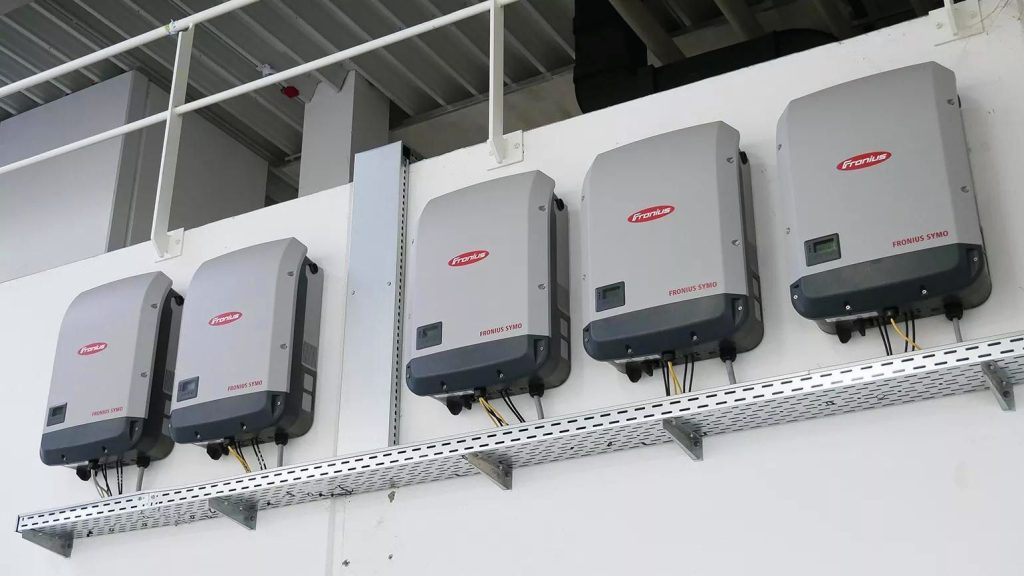
The string inverter, also known as central inverter, is one of the most common systems in residential and commercial photovoltaic installations. In this type of installation, the panels are connected together to form strings, and all the energy generated reaches a single inverter, which is responsible for transforming it into alternating current.
This type of inverter is usually a very efficient option when the installation has a homogeneous orientation and there are no relevant shadows. That is, it works especially well on clean roofs, with good solar exposure and panels placed in similar conditions.
Its main advantage is that it usually has a good relationship between cost, performance and maintenance. Because it is installed in an accessible area, such as a technical wall, garage, electrical room or protected area, servicing is easier than with other systems.
The point to keep in mind is that if a panel in a string produces less due to shading, dirt or damage, it can affect the performance of the string as a whole. Therefore, before installing a central inverter, it is essential to study well the orientation, inclination and possible obstacles of the roof.
Microinverters
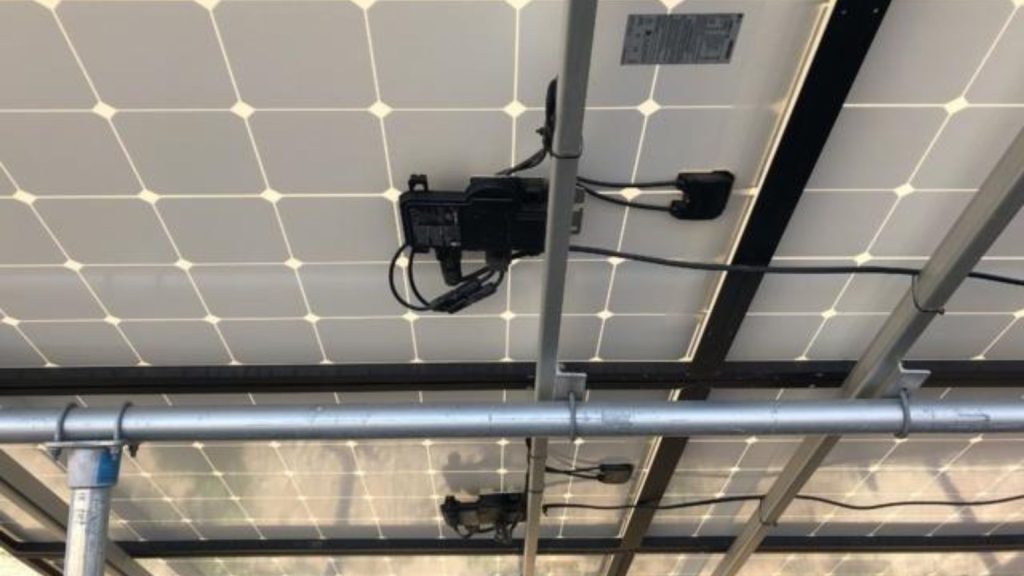
Microinverters work differently. Instead of having a single inverter for the entire installation, each panel has its own microinverter. This allows each module to work independently.
The great advantage of microinverters is that they individualize the production of each panel. If one of them is affected by a shadow, dirt, a bad orientation or a punctual failure, the rest of the panels can continue to produce normally. This helps to avoid significant yield losses in complex installations.
They also offer extra safety, since they work with lower DC voltages. In addition, they usually allow more detailed monitoring per panel, which makes it easier to detect specific incidents.
Microinverters are especially interesting for roofs with several orientations, partial shading, chimneys, obstacles, tilt differences or installations where maximum individual control of each panel is sought. On the downside, they usually imply a higher initial investment.
Hybrid inverters
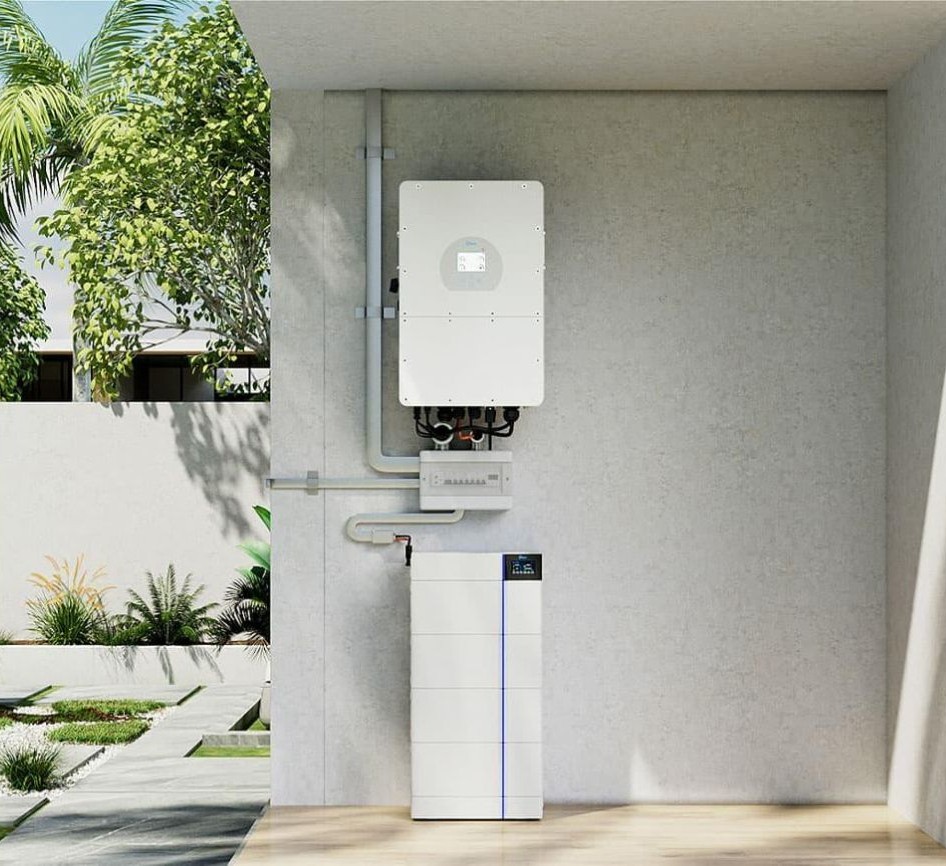
The hybrid inverter is an increasingly demanded option in solar self-consumption installations. Its main feature is that it allows solar batteries to be connected to the system, either from the beginning or later on.
This type of inverter transforms the direct current from the panels into alternating current, just like a traditional inverter, but it also manages the charging and discharging of the batteries. This makes it possible to store surplus energy during sunlight hours for use at night or at times of lower production.
Choosing a hybrid inverter can be a very smart decision if you want to prepare your installation for the future. Even if you do not initially install batteries, having a compatible inverter can make it much easier to expand at a later date.
An example of this type of solution is the Fronius Primo GEN24 Plus, a hybrid inverter that integrates compatible storage and improves the energy management of the installation.
All-in-one inverters
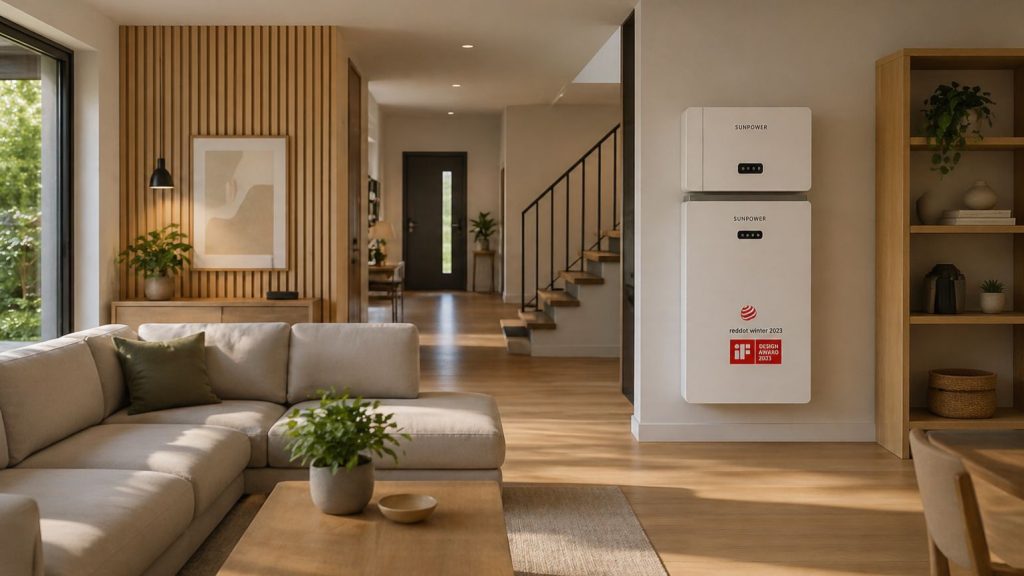
All-in-one systems integrate the inverter and energy storage in a single unit. In other words, they combine the energy conversion system with the battery, offering a compact and simpler solution from the installation point of view.
This type of equipment can be interesting for users who are looking for an integrated, aesthetic solution, ready to maximize self-consumption. An example of this type of system would be SunPower Reserve, which integrates inverter and storage in the same solution.
The main advantage is the simplicity of the system, although it may offer less flexibility than an installation with hybrid inverter and independent modular batteries.
Single-phase or three-phase inverter: which one do I need?
One of the most important decisions when choosing a solar inverter is whether the installation needs a single-phase or a three-phase inverter. This does not depend on the user’s taste, but on the type of existing electrical installation.
A single-phase inverter is used in single-phase electrical installations, which are common in many homes. A three-phase inverter, on the other hand, is used in three-phase installations, which are more common in companies, industrial buildings, large homes or buildings with high consumption.
Choosing this point incorrectly can cause imbalances in the installation. For example, if a house has a three-phase network and a single-phase inverter is installed without proper planning, the energy would be injected only in one phase, which could unbalance the system.
| Type of inverter | Usual use | Recommended for |
| Single-phase | Homes with single-phase network | Standard residential installations |
| Three-phase | Three-phase networks | Companies, warehouses, large dwellings and high consumption |
Therefore, before choosing a PV inverter, it is essential to check the electrical panel and the characteristics of the existing installation.
What is MPPT and why is it so important?
MPPT stands for Maximum Power Point Tracking. It is a technology integrated in solar inverters that allows to optimize the production of the panels at every moment.
Solar panels do not always produce the same. Their performance changes according to radiation, temperature, orientation, tilt and shading. The MPPT is responsible for adjusting the operation of the system to find the point at which the panels can produce the maximum possible power.
This is especially important when an installation has panels in different orientations. For example, if part of the panels face east and part face west, each group will receive solar radiation at different times of the day. If both groups are connected to the same MPPT input, the inverter may not work at the optimum point for either group.
Therefore, in installations with multiple orientations, it is important to choose an inverter with sufficient MPPT inputs. This allows each orientation to work independently and maximizes energy production.
Solar inverter monitoring
Monitoring is another key point. A good solar inverter should offer an application or software that allows visualization of energy production, consumption and system performance.
This monitoring serves to know how much energy the installation is generating, detect performance drops, check if there is any failure and analyze if the system is working as it should.
In a photovoltaic system, it is not enough to just produce energy: you have to be able to measure it. Without data, it is very difficult to know if the system is performing at its best or if there is a problem that is reducing savings.
Monitoring also allows the detection of incidents related to orientation, shadows, wiring, dirt on panels or equipment failures. In business installations, where energy savings and profitability are especially important, this information is key.
How to choose the best solar inverter
There is no single universal answer to choosing the best solar inverter. It depends on each installation. The most important thing is to analyze the use of the system, the type of building, the energy consumption, the shading, the orientation of the panels and if you want to incorporate storage.
In a house with a simple roof, good orientation and no shading, a string inverter can be a very efficient and cost-effective solution. On a roof with several orientations or partial shading, it may make more sense to value microinverters or optimizers. In an installation where you want to add a battery now or in the future, a hybrid inverter may be the best option.
Inverter performance at high temperatures must also be assessed. Inverters are electrical equipment and can operate at elevated temperatures. When the temperature rises, the performance may decrease. Therefore, ventilation and cooling systems are important. Some models, such as the Fronius GEN24 Plus, incorporate active ventilation to improve performance and protect the equipment.
Another important aspect is technical service. An inverter must not only be efficient: it must also have support behind it. If an incident occurs, a quick response can prevent production losses and improve the profitability of the installation.
Best solar inverter brands
There are many brands of solar inverters on the market, but not all offer the same level of performance, reliability or compatibility with storage systems. Choosing a good brand is key to ensuring the efficiency, durability and proper operation of a PV system over the long term.
Among the most prominent brands today are Fronius, Enphase, SunPower and Deye, manufacturers recognized for their quality, technological innovation and presence in the solar energy sector.
Fronius is one of the most consolidated brands in the European market, especially in residential and commercial installations. The Fronius Primo, designed for single-phase installations, and Fronius Symo, designed for three-phase systems, stand out. The Fronius GEN24 Plus range represents a more advanced solution, as it can work as a hybrid inverter, offering the possibility of integrating batteries and improving the energy management of the installation.
On the other hand, Enphase is a world reference in the development of microinverters. Its technology allows working at module level, i.e., each panel has its own inverter, which improves performance in installations with shadows, complex orientations or variable conditions. In addition, Enphase stands out for its advanced monitoring systems, which allow the behavior of each panel to be analyzed individually.
As for SunPower, it is a brand known for offering high-end integrated solutions. Its systems stand out for integrating advanced technology in both panels and energy storage. In the field of inverters, solutions such as SunPower Reserve make it possible to combine inverter and battery in a single system, facilitating installation and improving the overall efficiency of self-consumption.
Finally, Deye has positioned itself as one of the most competitive brands in the hybrid inverter market, especially in residential and commercial solutions with storage. Its equipment stands out for offering good value for money, high compatibility with batteries and flexibility in both grid-connected and stand-alone configurations. In addition, Deye inverters can manage different energy sources efficiently, which makes them an interesting option for installations seeking energy independence and optimization of self-consumption.
The choice of solar inverter brand should be made taking into account factors such as equipment quality, efficiency, warranty offered, battery compatibility, ease of monitoring and, especially, service availability. A good inverter should not only perform well, but also offer long-term support and reliability.
Common mistakes when choosing a solar inverter
One of the most common mistakes is to choose an inverter based on price alone. Although budget matters, a cheaper inverter can end up being expensive if it offers lower performance, fewer monitoring options, poorer MPPT management or less technical support.
Another common mistake is not taking shading into account. In installations where there are chimneys, trees, antennas, nearby buildings or multiple orientations, choosing the wrong type of inverter can significantly reduce production.
It is also common not to think about future expansions. If a home or business plans to increase consumption, install batteries or increase the number of panels, it is advisable to choose an inverter prepared for this purpose.
Finally, another important failure is not correctly checking whether the installation is single-phase or three-phase. This point should always be analyzed by a technical team before defining the system.
Price of a solar inverter
The price of a solar inverter depends on its power, type, brand, functionalities and battery compatibility. A conventional residential inverter is usually priced lower than a hybrid inverter, while a microinverter solution may increase the initial cost when installing one device per panel.
In general terms, a residential string inverter can be in the range of approximately 800 to 2,500 euros, while a hybrid inverter can range from 1,500 to 4,000 euros, depending on power and performance. Microinverters have a lower unit cost, but the total cost depends on the number of panels installed.
Beyond the initial price, the important thing is to look at profitability. An inverter with better performance, better monitoring and longer life can generate more savings in the long run.
Which solar inverter to choose for a house?
For a standard house with a well oriented roof and no shadows, it is usual to install a single-phase or three-phase string inverter, depending on the electrical network of the house. If the house has different orientations, partial shading or if panel monitoring is required, microinverters can be a very interesting option.
If you also want to install a battery or leave the installation ready for future storage, it is advisable to consider a hybrid inverter.
Which solar inverter to choose for a company?
In companies, industrial buildings and businesses, the choice of inverter must be made with special care. Normally we are talking about installations with higher power, higher consumption and more demanding profitability requirements.
Three-phase inverters with good MPPT management, high efficiency, advanced monitoring and solid technical support are usually used in these cases. The choice of inverter has a direct influence on energy savings and return on investment.
Conclusion: the solar inverter is the key to saving more money
The solar inverter is one of the most important components of a photovoltaic system. Its function is not limited to transforming direct current into alternating current: it also influences the performance, safety, monitoring, energy management and profitability of the system.
The choice between central inverter, microinverter, hybrid inverter or all-in-one will depend on the characteristics of each project. The important thing is not to make the decision based on price alone, but to evaluate the whole: efficiency, shading, orientation, MPPT, compatibility with batteries, technical service and expansion possibilities.
In Ubora we study each case in a personalized way to choose the most suitable inverter according to the house, company, building or community. This way we ensure that each photovoltaic installation is well dimensioned, efficient and makes the most of solar energy.
Do you have doubts about which solar inverter you need?
Contact our team and we will help you find the best solution for your installation.
And if you want to go even deeper and see all this explained in a clear and practical way, take a look at this video on our YouTube channel, where we show you in detail how solar inverters work and how to choose the most suitable one for your installation:
For more content, visit our social media channels: